How to Stop Giving Your Dog Too Many Treats?

Time:2026-09-20 Author:Henry
0%

Many dog owners ask how to stop giving too many treats without making their pets feel rejected. The challenge is rarely a lack of care. It is the small biscuit after a walk, the training reward at lunch, and the final chew before bed. Those calories can quietly become a second meal.

The Association for Pet Obesity Prevention reported in its 2022 State of Pet Obesity Report that 59% of dogs in the United States were overweight or obese. The World Small Animal Veterinary Association also recommends treating snacks as part of a dog’s complete daily calorie plan. Veterinary nutritionist Dr. Lisa M. Freeman has stated, “Treats should make up no more than 10% of your pet’s daily calories.” That practical limit gives owners a clear starting point.

Still, counting calories is not always simple. Treat labels may show calories per piece, while pieces vary widely in size. A small training treat may contain five calories, but a large dental chew can contain hundreds. Measuring the daily allowance before breakfast can prevent accidental overfeeding. Using part of the regular kibble ration for training may work even better.

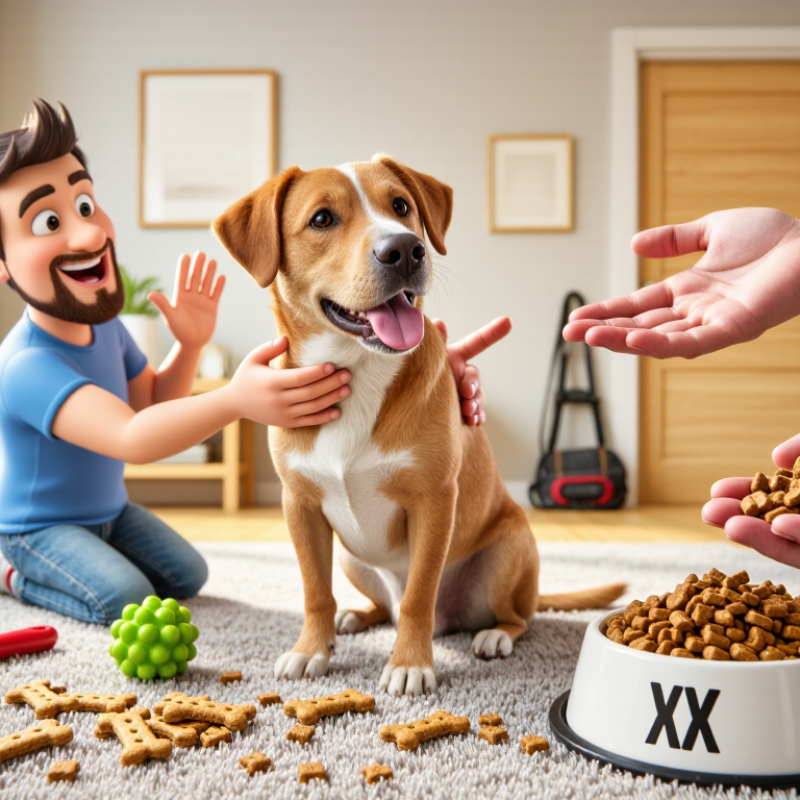
The emotional part deserves attention. Dogs often read our hands, voices, and routines before they notice the food. Replacing some treats with play, praise, sniffing time, or gentle brushing can preserve that connection. It may feel awkward at first. That is worth reflecting on. Healthier habits should support affection, not remove it.
How to Stop Giving Your Dog Too Many Treats?

Set a Treat Budget: WSAVA Limits Treats to 10% of Daily Calories

How to Stop Giving Your Dog Too Many Treats?

Treats can strengthen training, but generous hands can quietly add hundreds of calories. The World Small Animal Veterinary Association recommends keeping treats below 10% of a dog’s daily calories. This limit includes biscuits, dental chews, table scraps, and food used during training. A veterinarian can estimate your dog’s daily calorie needs, especially if your dog is overweight, elderly, or has a medical condition.

Try measuring the day’s treats into a small container each morning. For example, a dog needing 500 calories daily should receive no more than 50 treat calories. Check the package information, since one chew may contain more calories than expected. You can also reserve part of the regular meal for training rewards. I once used “small” treats too freely, assuming their size made them harmless. It did not. My dog gained weight slowly, and I noticed too late.

Tips: Break treats into tiny pieces. Reward calm behavior, not constant begging. Offer praise or a short play session instead. Keep a simple weekly weight record. If your dog seems hungry, ask a veterinary professional before increasing food. Calorie needs can change with exercise, age, weather, and illness. Some days, I still misjudge portions. Measuring helps.

Calculate Energy Needs with RER = 70 × kg^0.75 and Vet-Set MER

How to Stop Giving Your Dog Too Many Treats?

Treat control starts with a realistic calorie estimate. Use RER = 70 × (body weight in kilograms)^0.75. RER means resting energy requirement, not the complete daily allowance. For example, a 12-kilogram dog has an RER of about 451 calories daily. This figure supports basic body functions at rest.

Your veterinarian should set the MER, or maintenance energy requirement. The correct multiplier depends on age, neuter status, activity, health, and body condition. A healthy adult dog might need roughly 1.4 to 1.8 times RER, but this is not a universal rule. If the vet selects 1.6, that 12-kilogram dog would receive about 722 daily calories. Ten percent would allow approximately 72 calories for treats. Check the feeding guide, but do not treat it as perfect.

Small details matter. Weigh dry food with a kitchen scale. Count training pieces, dental chews, table scraps, and pill coverings. A biscuit may look harmless, yet several can equal a meal. I have noticed that “just one more” becomes difficult to track during busy evenings. That is my weak spot. Pre-measuring the day’s treats into a small container creates a visible limit. If your dog gains weight, begs constantly, or seems unusually hungry, record food for three days and contact your veterinarian. Recheck the MER after weight, exercise, or health changes.

Check Body Condition: WSAVA Rates Ideal Dogs 4–5 on a 9-Point Scale

How to Stop Giving Your Dog Too Many Treats?

I once rewarded my dog for every small success. A quiet sit earned food. So did eye contact. His waist slowly disappeared. I missed the change because daily portions still looked modest.

WSAVA’s Body Condition Score chart places ideal dogs at 4–5 on a nine-point scale. At this range, ribs are easy to feel, but not visibly sharp. A clear waist should appear from above. The abdomen should tuck upward from the side. Run your fingers across the ribs weekly. If you need pressure, his condition may be above ideal. Ask your veterinarian to confirm this assessment, especially for thick-coated dogs.

Treats should stay below 10% of daily calories, according to the WSAVA Global Nutrition Toolkit. The 2021 AAHA Nutrition and Weight Management Guidelines also recommend counting treats within total energy intake. A medium biscuit can quietly add more calories than expected. Measure the day’s treats into a small container each morning. Use part of his regular meal for training. Keep cheese, meat, and table scraps occasional.

Numbers help. Habits matter more. The Association for Pet Obesity Prevention reported that 59% of surveyed dogs were overweight or obese in its 2022 survey. That figure made me reconsider “just one more.” I still misjudge sometimes. Record his weight monthly, photograph his side profile, and reduce extras gradually when his waist fades. Sudden restriction can create frustration and may need veterinary guidance.

Measure Every Reward and Record Its Calories, Including Training Treats

Too many treats rarely arrive as one dramatic mistake; they accumulate beside the food bowl, during walks, and after training. Measure every reward before the day begins, rather than guessing from a handful. Use a kitchen scale for larger biscuits, and split soft treats into pea-sized pieces. Small pieces add up. Write each item in a simple note: time, amount, purpose, and estimated calories. Include treats used for recalls, leash practice, grooming, and quiet behavior. If the package lists calories per piece, record that figure; if it lists calories by weight, calculate from grams.

A daily treat budget should fit within the dog's total calorie needs, not sit outside them. Veterinary guidance often keeps treats near 10 percent of daily calories, but age, health, activity, and medical conditions matter. Ask a veterinarian for an individual target, especially for an overweight dog or one with diabetes, allergies, or digestive problems. Then remove those calories from meals, using part of the regular food for training when practical. Keep the log visible. After a week, compare the written total with the empty treat container; the mismatch can be surprisingly honest. I would not pretend every crumb is measurable, because dropped food and shared bites happen. Still, recording nearly everything reveals patterns, such as rewarding boredom or repeating a cue too often. That record also helps a veterinarian adjust portions safely when the dog's weight, stool, or energy changes.

How to Stop Giving Your Dog Too Many Treats?

Measure every reward and record its calories, including training treats. This example tracks a 10 kg adult dog using a planning limit of 55 treat calories per day, equal to 10% of an estimated 550 kcal daily energy intake. Treat needs vary by dog, so confirm the appropriate calorie allowance with a veterinarian.

The daily total combines training treats, chews, and food shared from the table. Days above the limit show why measuring portions and recording every reward can help prevent accidental overfeeding.

Reduce Calories Safely: AAHA Recommends 1–2% Weekly Weight Loss

How to Stop Giving Your Dog Too Many Treats?

Safe weight loss should be gradual, not dramatic. The American Animal Hospital Association recommends losing about 1–2% of body weight weekly for overweight dogs. A 40-pound dog would lose roughly 0.4–0.8 pounds each week. Faster loss may increase hunger, muscle loss, or health risks. Ask a veterinarian to confirm a suitable target, especially for puppies, seniors, or dogs with medical conditions.

Measure every treat, including dental chews and scraps from the table. Treats should fit within the daily calorie plan, not sit outside it. Try breaking one biscuit into several tiny pieces. Reserve part of your dog’s regular meal for training rewards. A kitchen scale helps when “just one more” becomes five. Small changes matter. Keep it boring.

Weigh your dog weekly on the same scale and around the same time. Record food, treats, activity, and weight in a simple notebook. If weight does not change after two or three weeks, review portions with your veterinarian instead of cutting food sharply. If your dog loses more than 2% weekly, seems weak, or constantly begs, contact the clinic. Even careful owners miscount treats. A friendly face can make portion control feel cruel, but steady progress protects health better than sudden restriction.

How to Stop Giving Your Dog Too Many Treats? — Reduce Calories Safely: 1–2% Weekly Weight Loss
Area to Monitor Evidence-Based Target How to Apply It Example or Calculation When to Adjust
Weekly weight-loss rate 1–2% of current body weight per week Weigh the dog under similar conditions once weekly and compare the result with the previous week. A 20 kg dog would typically lose about 0.2–0.4 kg per week. If weight loss is consistently faster than 2% weekly, consult a veterinarian about increasing calories. If there is no loss over several weeks, review food portions, treats, activity, and medical factors.
Treat calorie limit Treats and extras should generally provide no more than 10% of daily calories. Include biscuits, chews, table food, pill pockets, dental products, and food used for training in the daily treat allowance. For a 500 kcal daily allowance: 500 × 10% = 50 kcal maximum from treats. Reduce the treat budget if the dog is gaining weight, is inactive, or receives several calorie-dense chews.
Daily calorie allowance Use the veterinarian’s prescribed calorie target rather than relying only on package feeding instructions. Food labels provide starting guidance, but calorie needs vary with age, body condition, activity, neuter status, health, and metabolism. Record the food’s kcal per cup, can, pouch, or gram before calculating the daily portion. Reassess after about 2–4 weeks, or sooner if the dog has illness, marked hunger, lethargy, vomiting, or diarrhea.
Portioning treats Measure the full day’s treat allowance before training begins. Place the allowance in one container and use only that amount throughout the day. If the daily treat budget is 40 kcal, do not refill the container after it is empty. Use smaller pieces for training. The reward frequency can remain high while each individual piece becomes smaller.
Lower-calorie rewards Choose small, plain foods that fit the dog’s diet and medical needs. Use part of the dog’s measured regular meal as training rewards, or select veterinarian-approved low-calorie options. Reserve a portion of the daily kibble before feeding meals and use it during training. Avoid new foods if the dog has allergies, food sensitivities, pancreatitis, kidney disease, diabetes, or another condition requiring a therapeutic diet unless approved by a veterinarian.
Table-food control Human food should not become an unmeasured source of extra calories. Keep treats predictable, measured, and separate from family meals. Replace spontaneous table scraps with attention, play, sniffing activities, or a measured reward. Stop using any food that causes digestive upset or contains toxic ingredients such as chocolate, grapes, raisins, onions, garlic, or xylitol.
Reward alternatives Not every desired behavior needs a food reward. Combine praise, petting, play, a brief walk, access to a favorite toy, and food rewards. For calm behavior, offer verbal praise or a short play session instead of an additional treat. If non-food rewards do not work, use a smaller food reward and count it within the daily allowance.
Body-condition tracking Body weight alone does not show changes in muscle and fat distribution. Monitor waist shape, abdominal tuck, rib coverage, body weight, and activity level. Healthy body condition commonly includes ribs that can be felt under a thin covering of fat and a visible waist when viewed from above. Ask a veterinary professional to assess body condition, especially for growing, senior, very muscular, or long-coated dogs.
Safe calorie reduction Make gradual changes rather than abruptly removing large amounts of food. First eliminate uncounted extras and replace oversized treats with measured portions. Keep nutrition balanced. Count all calories from meals, treats, chews, supplements, and food used to administer medication. Do not substantially restrict food without professional guidance, particularly for puppies, pregnant or nursing dogs, underweight dogs, or dogs with medical conditions.
Progress review Evaluate the trend, not a single scale reading. Record weekly weight, daily food amount, treat calories, exercise, and notable symptoms. A four-week record can reveal whether changes in weight match the intended 1–2% weekly range. Contact a veterinarian if weight changes unexpectedly or the dog develops persistent hunger, weakness, reduced activity, vomiting, diarrhea, or other concerning signs.
Calorie needs and safe weight-loss plans are individual. A veterinarian should confirm the target weight and daily calorie allowance, especially when the dog is young, elderly, pregnant, nursing, underweight, overweight, or affected by a medical condition.

FAQS

How many treat calories should a dog receive each day?

Veterinary guidance often keeps treats below 10% of daily calories. This includes biscuits, chews, scraps, and training rewards. A 500-calorie diet allows about 50 treat calories. Check the daily total.

How can I estimate my dog’s calorie needs?

Use RER = 70 × body weight in kilograms^0.75. A 12-kilogram dog has an RER near 451 calories. RER is only a resting estimate. A veterinarian should set the maintenance amount.

How do I calculate a practical treat budget?

If a veterinarian sets 722 daily calories, 10% equals about 72 treat calories. The correct amount varies with age, exercise, health, and body condition. Do not rely on one formula alone.

What foods should count as treats?

Count biscuits, dental chews, table scraps, and pill coverings. Include tiny training pieces. A shared bite still counts. So does dropped food, when possible.

How can I stop guessing treat portions?

Place the day’s treats in a small container each morning. Break soft treats into pea-sized pieces. Weigh larger items with a kitchen scale. An empty container can reveal mistakes.

Can regular meal food replace training treats?

Yes, reserve part of the regular meal for training. Remove those calories from the bowl later. This keeps rewards inside the daily budget. It feels simple, but consistency matters.

What should I record during the day?

Note the time, amount, purpose, and estimated calories. Include rewards for recalls, grooming, leash practice, and calm behavior. Keep the note visible. Patterns become easier to notice.

What can I do when my dog keeps begging?

Reward quiet behavior with praise or a short play session. Avoid answering every stare with food. Some days, portions may still be misjudged. Measuring helps correct the habit.

When should I contact a veterinarian?

Ask for guidance if your dog gains weight, begs constantly, or seems unusually hungry. Contact a professional before increasing food. Recheck portions after changes in exercise, age, weight, or health.

Conclusion

Learning how to stop giving too many treats begins with setting a clear daily treat budget. Treats and other extras should generally provide no more than 10% of your dog’s total daily calories. To estimate food needs, use the resting energy requirement formula, RER = 70 × body weight in kilograms^0.75, then work with your veterinarian to determine the appropriate maintenance energy requirement. This helps prevent rewarding your dog beyond its actual nutritional needs.

Monitor body condition regularly, aiming for an ideal score of 4–5 on a nine-point scale. Measure every reward, including small training treats, and record its calories so you can track the daily total accurately. If your dog needs to lose weight, reduce calories gradually and safely, targeting about 1–2% of body weight per week under veterinary guidance. Replace some treats with praise, play, or attention to maintain positive training without excessive calories.

Henry

Henry

Henry is a dedicated marketing professional with a profound expertise in the company's offerings. With years of experience in the industry, he possesses an impressive understanding of the market dynamics and consumer behaviors that drive success. Henry is committed to sharing his insights through......